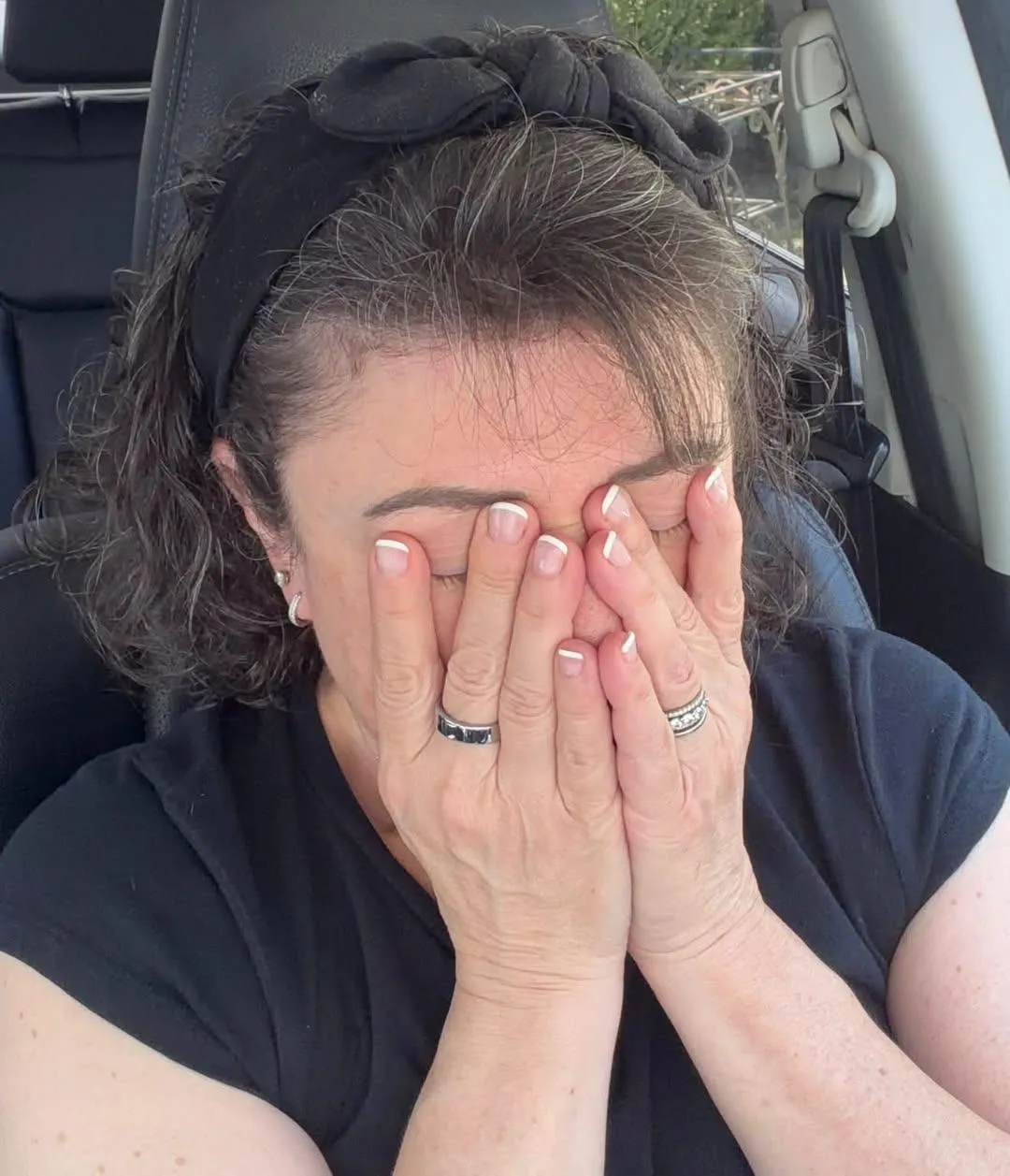
DEAR HER: SITTING IN THE GROCERY STORE PARKING LOT WITH A SECRET
Have You Ever Eaten Something in Secret and Wondered, "What Is Wrong With Me?"
Dear Her,
I see you sitting in the grocery store parking lot.
You told yourself you were only going in for a few things.
Chicken for dinner.
Coffee creamer.
Maybe a bagged salad.
You had a list.
You had a plan.
You fully intended to walk out with exactly what you came for.
But somehow there are chocolate-covered almonds in the cart.
Cookies.
Candy.
A pastry.
A few things that definitely weren't on the list.
And before you ever pull into your driveway, they're gone.
The wrappers are shoved into the bottom of a grocery bag.
Maybe tucked into the center console.
Maybe tossed into a trash can on the way home.
Nobody will know.
At least that's what you're telling yourself.
But you know.
And that's when the feelings come rushing back.
Shame.
Disappointment.
Frustration.
The promise that tomorrow will be different.
The vow to "get back on track" Monday.
The question you've asked yourself a hundred times:
What's wrong with me?
Why Do Women Eat in Secret?
Here's what I've learned after years of struggling myself, decades working as a nurse, and helping women improve their metabolic health:
The food usually isn't the problem.
Food is often the coping mechanism.
Secret eating can happen when women are trying to manage:
Exhaustion
Stress
Loneliness
Overwhelm
Hormonal shifts
Emotional pain
Perfectionism
Caregiver burnout
Chronic dieting fatigue
For many women, eating in the car isn't about being hungry.
It's about finally having ten minutes where no one needs anything from them.
No texts.
No dishes.
No work.
No responsibilities.
Just silence.
And food becomes the temporary escape.
Is Secret Eating a Sign of Weakness?
No.
I don't believe it is.
I know because I was her.
Not once.
Not occasionally.
For years.
I was the woman who could show up for everyone else.
I could work.
Care for patients.
Raise kids.
Manage schedules.
Support friends.
Smile.
Encourage others.
But put me in a grocery store parking lot with chocolate-covered almonds, and I felt powerless.
I couldn't understand why I was successful in every other area of life but struggled so deeply with food.
I kept asking:
Why can't I control myself?
Why do I keep doing this?
Why can't I just stop?
The answer surprised me.
I wasn't weak.
I was overwhelmed.
I wasn't broken.
I was exhausted.
I wasn't addicted to food.
I was using food to soothe parts of myself that desperately needed care.
What Is Emotional Eating Really Trying to Tell Us?
I think emotional eating often asks a different question.
Not:
"What should I stop eating?"
But:
"What hurts?"
Maybe you're carrying too much.
Maybe you're grieving.
Maybe you've spent years putting yourself last.
Maybe you've been trying to earn your worth through perfection.
Maybe you've become so good at taking care of everyone else that you've forgotten how to care for yourself.
Food can temporarily numb those feelings.
But it can never heal them.
Eventually, the chocolate disappears.
The cookies are gone.
The wrappers are hidden.
And the pain comes back.
How Did Things Change For Me?
The biggest change wasn't that cravings disappeared.
The biggest change was learning what to do when they showed up.
I stopped fighting myself.
I stopped using shame as motivation.
I stopped believing I needed more discipline.
Instead, I learned better tools.
I learned to pause.
I learned to identify emotions.
I learned to ask what I needed.
Sometimes I needed protein.
Sometimes I needed water.
Sometimes I needed sleep.
Sometimes I needed movement.
Sometimes I simply needed someone to listen.
And little by little, I learned that consistency heals more than punishment ever will.
What If You're Reading This and It's You?
Maybe you're sitting in a parking lot right now.
Maybe you're reading this from your phone.
Maybe you're wiping tears before heading home.
Maybe you're wondering how I know.
I know because I was you.
And I want you to hear this:
There is nothing wrong with you.
You are not lazy.
You are not weak.
You are not broken.
You are a woman who found a coping strategy that helped you survive a difficult season.
And perhaps today doesn't need to be the day you change your whole life.
Maybe today is simply the day you stop hiding.
Maybe today is the day you stop asking:
"What's wrong with me?"
And begin asking:
"What do I need?"
Because healing begins when shame loses its hiding place.
And healing becomes possible when we realize we were never meant to carry these secrets alone.
Love,
The Woman You Become
Frequently Asked Questions About Secret Eating
Why do I eat in secret?
Secret eating is often connected to stress, overwhelm, emotional pain, chronic dieting, or using food as a coping mechanism rather than physical hunger.
Is emotional eating an eating disorder?
Not always. Emotional eating exists on a spectrum. If eating feels compulsive, causes distress, or interferes with daily life, talking with a healthcare professional or therapist can be helpful.
Can menopause make emotional eating worse?
Yes. Hormonal shifts during perimenopause and menopause can impact appetite, cravings, mood, sleep, and insulin sensitivity, which may contribute to emotional eating behaviors.
What's the first step to overcoming secret eating?
Compassion. Instead of asking, "Why am I doing this?" try asking, "What am I feeling right now, and what do I truly need?"